





Radon: the invisible enemy
What is radon gas?
Radon gas is a naturally occurring radioactive gas that is generated by the decay of uranium present in soils and rocks. It is colorless, odorless and tasteless, making it difficult to detect without specialized equipment.
Why is it dangerous?
Radon gas is the leading cause of lung cancer in non-smokers and the second leading cause in smokers, according to the World Health Organization (WHO). When it accumulates in enclosed spaces, such as homes or buildings, prolonged inhalation can significantly increase the risk of developing this disease. Prolonged exposure to concentrations above 300 Bq/m� represents a significant health risk.
How does it enter the homes?
Radon can seep into homes through:
- Cracks in floors and walls.
- Construction joints.
- Drains and drains.
- The building materials themselves.
Where is it most commonly found?
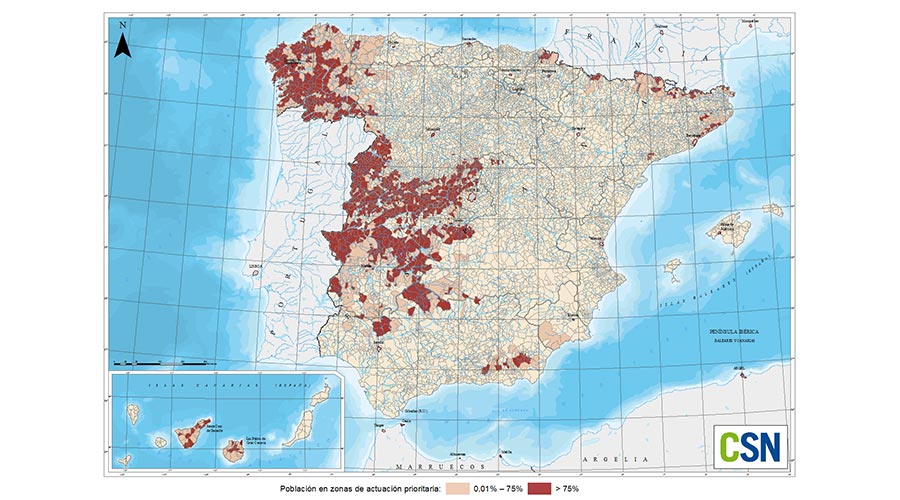
The level of radon varies by geographic area. In Spain, the areas with the highest concentration of radon gas include:
.
- Galicia.
- Castilla y Le�n (especially in mountainous areas and areas with granitic soils).
- Extremadura.
- Principality of Asturias.
- Community of Madrid (in some specific localities).
- Some areas of Castilla-La Mancha and Arag�n. These regions have soils rich in uranium or granitic materials that favor radon emission.
How do I know
if my home is at risk?
The best way to determine the radon concentration in your home is by specific tests such as the use of passive detectors placed for a minimum of 2-3 months for an accurate measurement.
How can we help you?
In Eurocontrol we are specialists in industrial hygiene and we offer services to detect and mitigate the problem of radon gas in homes:
- Initial assessment: We perform detailed studies to measure radon levels using approved equipment and qualified personnel.
- Personalized advice: We provide a complete analysis of the results and recommendation of the most appropriate measures according to your specific situation.
How can you protect yourself?
- Test your home for radon.
- Consider mitigation measures if levels exceed the recommendations (300 Bq/m3 according to CSN and EU regulations).
- Trust Eurocontrol to accompany you every step of the way.
Remember: protecting your home against radon gas is an investment in your and your family's health.
Discover
our news